
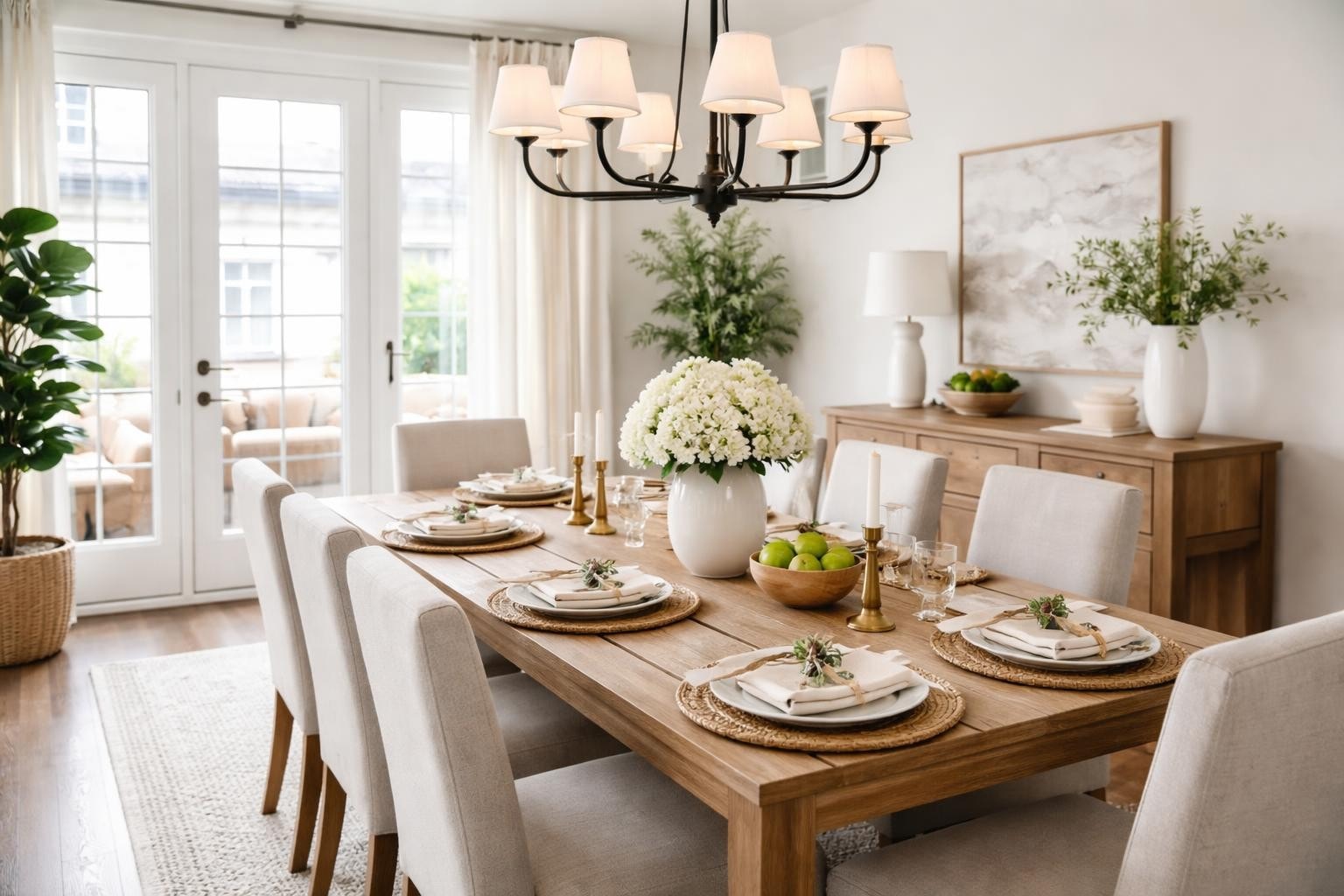

The dining room often gets overlooked during the home staging process, yet it serves as a powerful selling feature that showcases lifestyle potential to prospective buyers. A well-staged dining area communicates gathering spaces, entertainment possibilities, and daily living comfort. When done correctly, dining room staging transforms an underutilized space into a compelling reason for buyers to envision themselves hosting family dinners and creating memories in your property.
Understanding the Impact of Proper Dining Room Presentation
Dining rooms represent more than just places to eat. They symbolize connection, celebration, and hospitality. Buyers touring properties make instant judgments about these spaces based on how well they can picture themselves using them.
Why Dining Spaces Influence Purchase Decisions
Research consistently shows that staged homes sell faster and often command higher prices than unstaged properties. The dining room contributes significantly to this advantage because it appeals to emotional decision-making rather than purely practical considerations.
Key psychological factors at play:
Lifestyle aspiration: Buyers imagine entertaining guests and hosting holidays
Space functionality: A defined dining area demonstrates thoughtful home layout
Home value perception: Quality staging signals a well-maintained property
Emotional connection: Set tables and inviting arrangements create immediate warmth
When potential buyers walk through a property, they spend approximately 15-30 seconds in each room. Your dining room presentation must make an immediate impression that resonates with their vision of home life.
Essential Elements of Effective Dining Room Staging
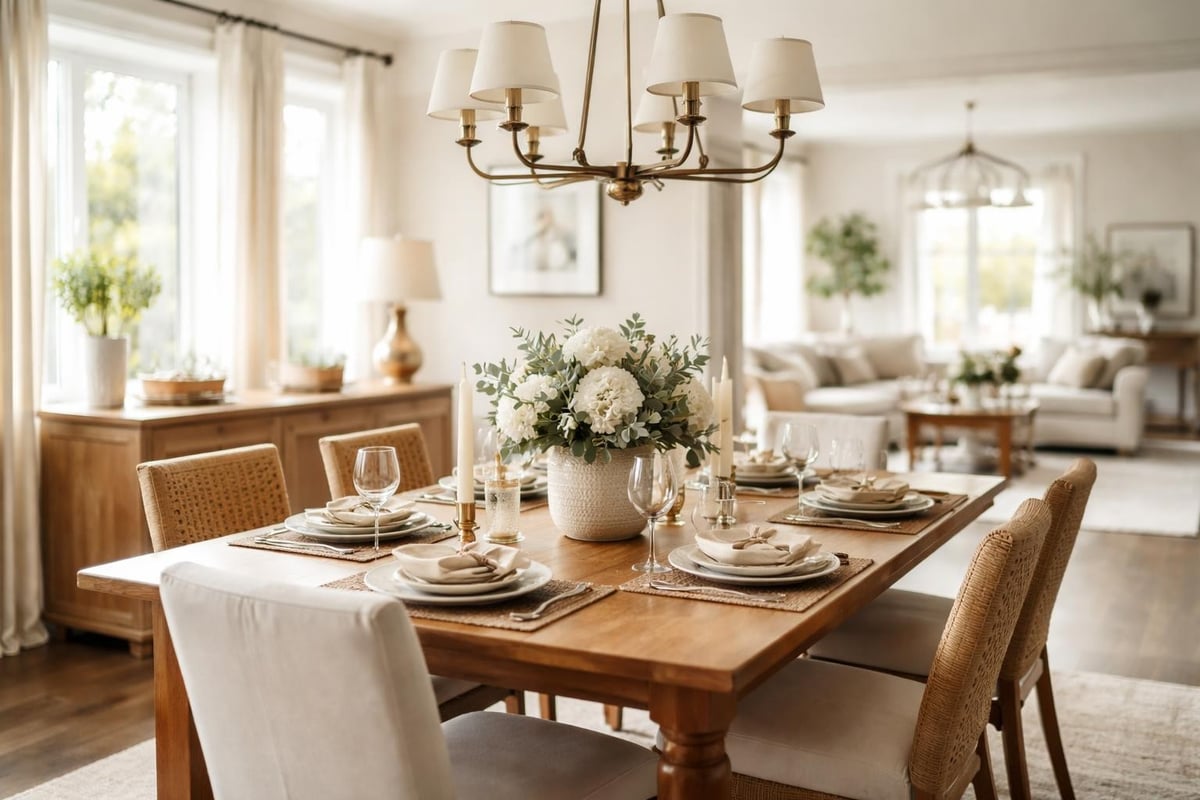
Creating an appealing dining space requires attention to several fundamental components that work together harmoniously. Each element contributes to the overall impression and should receive careful consideration during the staging process.
Furniture Selection and Scale
The dining table serves as the room's focal point and must be proportioned correctly for the space. An oversized table makes the room feel cramped, while an undersized piece suggests the space lacks functionality.
Room Size | Recommended Table Size | Seating Capacity |
|---|---|---|
10' x 10' | 36"-42" round | 4 people |
10' x 12' | 48"-60" rectangular | 4-6 people |
12' x 14' | 60"-72" rectangular | 6-8 people |
14' x 18' | 72"-96" rectangular | 8-10 people |
Leave at least 36 inches of clearance between the table edge and walls or other furniture. This spacing allows comfortable chair movement and creates an uncluttered feel. Professional staging services in San Diego understand these spatial relationships and select pieces that optimize the room's proportions.
Lighting Strategy for Maximum Appeal
Lighting dramatically affects how buyers perceive dining spaces. Proper illumination highlights architectural features, creates ambiance, and makes rooms feel larger and more inviting.
Consider these lighting approaches for dining room staging:
Replace outdated fixtures with modern chandeliers or pendant lights
Layer lighting sources using overhead, accent, and natural light
Install dimmer switches to demonstrate versatility
Maximize natural light by using sheer window treatments
Add table lamps or buffet lamps for warmth and depth
The chandelier or primary light fixture should hang 30-34 inches above the table surface for optimal proportion and function. This height provides adequate illumination without obstructing sightlines across the table.
Color Palette and Design Cohesion
Neutral color schemes dominate successful staging projects because they appeal to the broadest buyer demographic. However, neutral doesn't mean boring when executed with intention and sophisticated styling.
Creating Visual Interest Within Neutral Frameworks
Stage Joy's approach to home staging emphasizes building layers of texture and subtle color variation within neutral palettes. This technique adds sophistication without alienating potential buyers who might reject bold color choices.
Recommended neutral base colors:
Warm whites and creams
Soft grays and greiges
Natural wood tones
Muted earth tones
Introduce visual interest through varying textures in table linens, chair upholstery, area rugs, and window treatments. A cream-colored room becomes dynamic when it incorporates linen napkins, velvet chair cushions, a jute rug, and sheer silk curtains.
Accent Pieces and Styling Details
Strategic accent colors add energy without overwhelming the space. Limit accent colors to one or two complementary shades used sparingly in artwork, centerpieces, or decorative objects.
Effective accent applications include:
Fresh flowers or greenery in the table centerpiece
Coordinated artwork that complements the overall palette
Decorative bowls or vases on sideboards
Coordinated chair cushions in subtle patterns
These professional staging techniques help create cohesive, magazine-worthy presentations that photograph beautifully and impress during in-person showings.
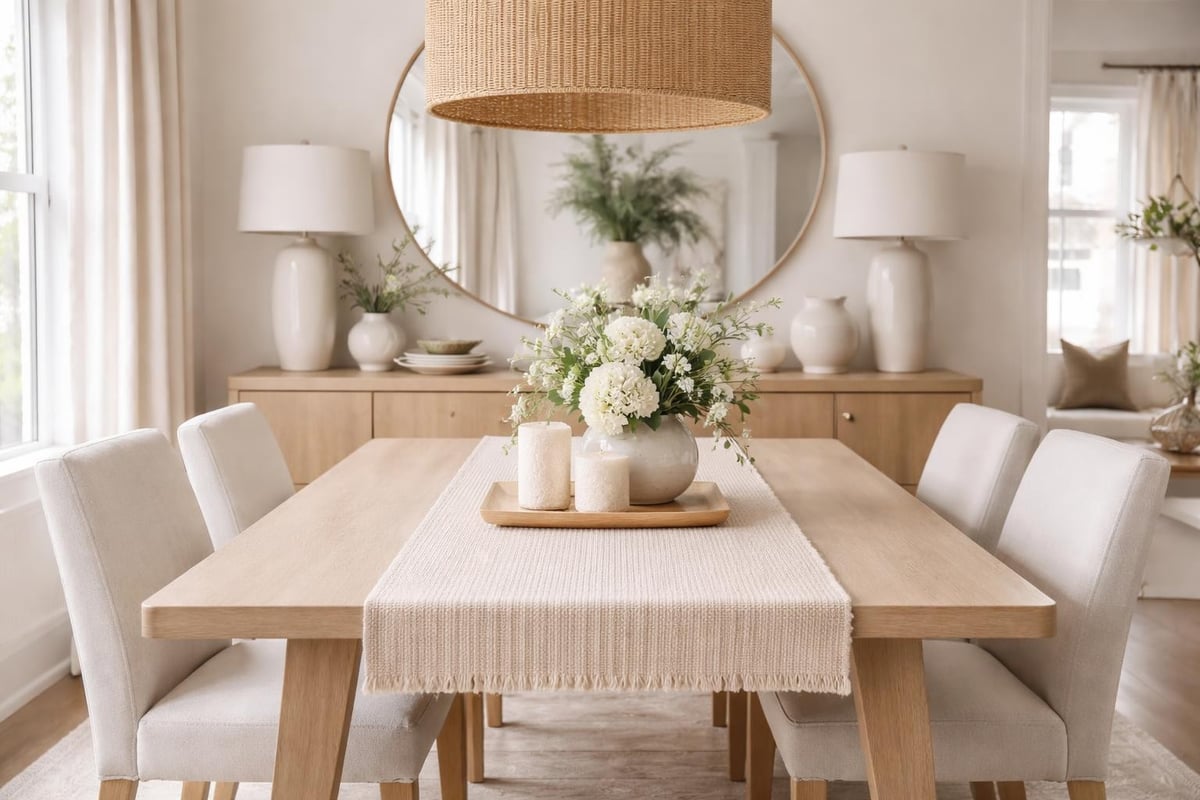
Table Setting and Centerpiece Design
The dining table itself deserves special attention during the staging process. A thoughtfully styled table communicates the room's purpose immediately and creates an inviting focal point.
Balancing Elegance and Approachability
Your table presentation should strike a balance between aspirational elegance and comfortable approachability. Overly formal settings can feel intimidating, while completely bare tables fail to demonstrate the space's potential.
For luxury properties that command premium pricing, Stage Joy's Luxury Home Staging (Lux Package) includes sophisticated table presentations with premium linens, elegant place settings, and designer centerpieces that elevate the entire dining experience and justify higher asking prices.
Consider these table staging options based on your property and target market:
Staging Level | Elements | Best For |
|---|---|---|
Minimal | Simple runner, single centerpiece | Contemporary homes, smaller spaces |
Moderate | Placemats, centerpiece, decorative chargers | Mid-range family homes |
Elevated | Full place settings, layered linens, floral arrangement | Luxury properties, formal dining rooms |
Centerpiece Guidelines and Best Practices
Centerpieces anchor the table design but shouldn't overwhelm the space. Follow these proven principles when selecting and arranging centerpieces:
Keep height under 12 inches to maintain sightlines across the table
Use fresh or high-quality artificial flowers in neutral or seasonal colors
Incorporate natural elements like branches, fruit, or greenery
Maintain symmetry and balance in arrangement composition
Scale appropriately to table size and room proportions
Setting the dining table effectively creates memorable impressions that linger with buyers long after they've toured the property.
Decluttering and Spatial Organization
Dining rooms frequently become catchall spaces for mail, homework, and miscellaneous household items. Before any styling can occur, complete decluttering is essential to reveal the room's true potential.
Removing Personal Items and Excess Furniture
Personal photographs, children's artwork, and family memorabilia prevent buyers from envisioning their own lives in the space. Remove all personal items and store them during the selling process.
Items to remove from dining rooms:
Family photos and personal artwork
Religious or political items
Collections and memorabilia
Excess furniture pieces (china cabinets, extra chairs)
Paperwork, bills, and office supplies
Pet accessories and supplies
Many homes feature dining rooms with multiple furniture pieces competing for attention. Consider whether each item serves the staged presentation. A buffet or sideboard adds functionality, but overcrowding diminishes the room's appeal.
Creating Clear Pathways and Flow
Buyers should move easily through dining spaces without navigating obstacle courses. The room layout should facilitate natural traffic flow from adjacent spaces like kitchens and living rooms.
Standard clearances for optimal flow include:
48 inches for primary walkways through the room
36 inches between table and walls for chair access
30 inches minimum for secondary pathways
These measurements ensure the space feels generous and functional rather than cramped or awkward. Our portfolio demonstrates how proper spatial planning transforms dining areas into standout selling features.
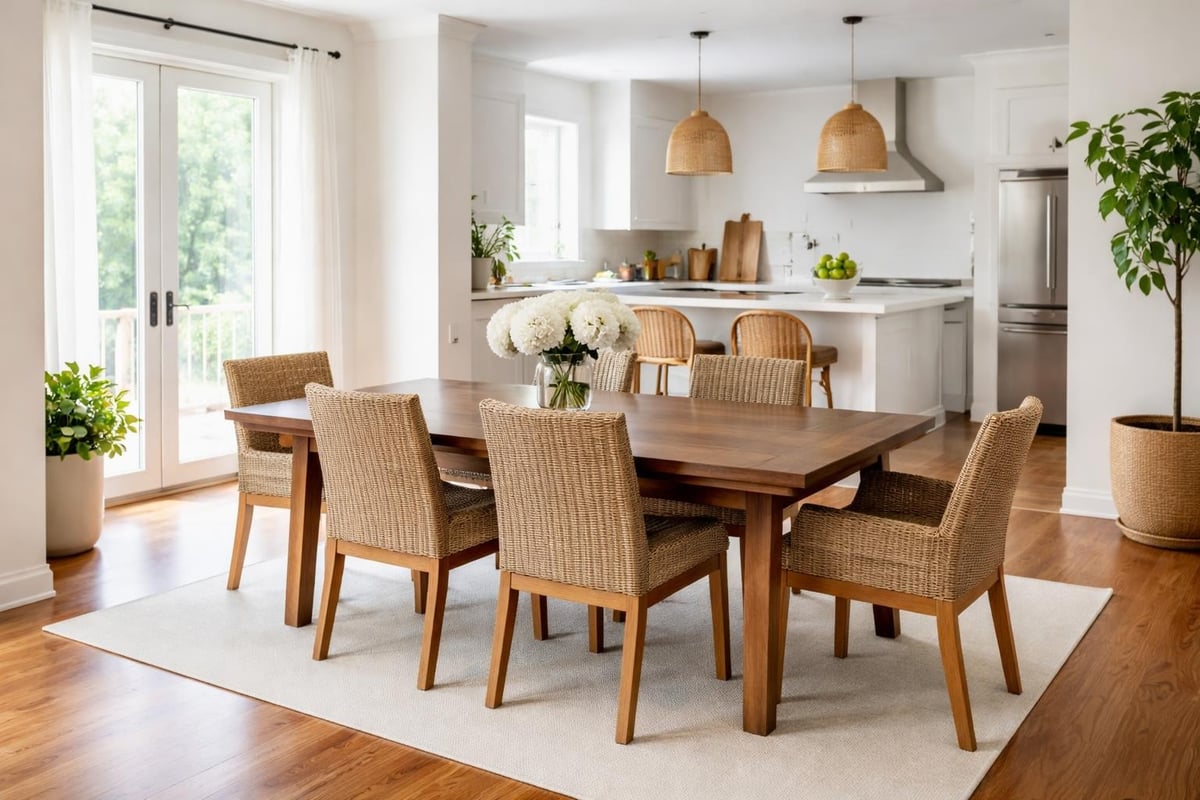
Strategic Use of Mirrors and Artwork
Wall treatments significantly impact how buyers perceive dining room size and ambiance. Mirrors and artwork serve both aesthetic and functional purposes when selected and positioned strategically.
Mirrors for Spatial Enhancement
Mirrors create the illusion of expanded space and reflect natural light throughout the room. Position mirrors opposite windows to maximize their light-amplifying effect.
Mirror placement strategies:
Hang large mirrors on the longest wall to elongate the space
Position mirrors to reflect attractive views or architectural features
Avoid placing mirrors where they reflect clutter or unappealing elements
Use mirrors with frames that complement the room's style
Oversized mirrors make particularly strong statements in dining rooms, often serving as focal points that compete favorably with traditional artwork.
Artwork Selection and Hanging Guidelines
Artwork should complement rather than dominate dining spaces. Select pieces that enhance the neutral color palette while adding sophistication and personality.
Choose artwork that measures approximately two-thirds to three-quarters the width of the furniture piece it hangs above. Center artwork at eye level, typically 57-60 inches from the floor to the piece's center point. These professional staging principles ensure polished, gallery-quality presentations.
Flooring and Rug Considerations
Floor treatments ground the dining room design and define the space, particularly in open-concept layouts where rooms flow together without architectural boundaries.
Area Rug Selection and Sizing
When incorporating area rugs into dining room staging, ensure the rug extends at least 24 inches beyond the table on all sides. This sizing allows chairs to remain on the rug even when pulled out for seating.
Table Size | Minimum Rug Size | Ideal Rug Size |
|---|---|---|
48" round | 8' round | 9' round |
60" round | 9' round | 10' round |
72" rectangular | 8' x 10' | 9' x 12' |
96" rectangular | 9' x 12' | 10' x 14' |
Choose rugs in neutral tones that complement the overall color scheme without introducing jarring patterns or bold colors. Natural fiber rugs like jute or sisal work well in casual settings, while plush wool or silk blend rugs suit formal spaces.
Addressing Floor Condition Issues
Before staging begins, assess flooring condition honestly. Scratched hardwood, stained carpet, or damaged tile detracts from even the most beautiful staging efforts.
Floor improvement options include:
Professional cleaning and polishing for hardwood
Steam cleaning or replacement for carpets
Grout cleaning and tile repair
Strategic rug placement to cover damaged areas
Fresh paint for concrete or painted floors
Investing in flooring improvements often yields significant returns by elevating the entire room's presentation quality.
Window Treatments and Natural Light
Windows connect dining spaces to outdoor views while controlling natural light that affects ambiance and photography. Optimizing lighting through window treatments represents a critical staging consideration.
Maximizing Natural Light Benefits
Natural light makes rooms feel larger, more inviting, and more valuable. Remove heavy, dark curtains that block sunlight and replace them with sheer treatments that filter light while maintaining privacy.
Window treatment best practices:
Use white or cream sheers for maximum light transmission
Install treatments that extend beyond window frames to create height illusion
Ensure all treatments are clean, pressed, and in excellent condition
Remove damaged blinds or outdated treatments entirely
Consider bare windows if views are attractive and privacy isn't compromised
For properties with limited natural light, enhance window areas with strategic mirror placement and layered artificial lighting that compensates for dimness.
Balancing Privacy and Openness
While maximizing light benefits staging efforts, privacy remains important, especially for urban properties or homes with nearby neighbors. Layer sheer curtains with neutral drapes that can be drawn when needed, demonstrating versatility to potential buyers.
Seasonal Staging Adaptations
Dining room staging can incorporate subtle seasonal elements that make the space feel current and well-maintained without limiting buyer imagination or appeal.
Spring and Summer Approaches
Warmer months invite lighter, brighter staging with fresh flowers, pastel accent colors, and airy table settings. Consider these seasonal touches:
Fresh citrus or bright flowers in centerpieces
Lighter linens in white, cream, or soft blue
Natural elements like shells, driftwood, or botanical prints
Increased natural light through minimal window treatments
Fall and Winter Strategies
Cooler seasons accommodate richer textures and slightly deeper colors while maintaining neutral foundations. Seasonal adaptations might include:
Warm metallics like copper or bronze in accessories
Deeper neutrals like taupe or warm gray
Textured elements like velvet, wool, or faux fur
Candles or lanterns for cozy ambiance (unlit for showings)
Avoid overtly holiday-specific decorations that date the listing or exclude buyers who don't celebrate particular holidays. The team at Stage Joy brings extensive design expertise to creating timeless presentations that appeal throughout the selling season.
Common Dining Room Staging Mistakes to Avoid
Even experienced sellers make preventable errors when staging dining spaces. Recognizing these pitfalls helps you create more effective presentations.
Overstyling and Clutter
Adding too many decorative elements creates visual chaos rather than appealing ambiance. Each item in the staged room should serve a clear purpose in the overall design narrative.
Signs of overstyling include:
Crowded tabletops with excessive decorative objects
Too many competing colors or patterns
Overstuffed china cabinets or shelving
Multiple centerpieces or conflicting focal points
Remember that effective staging emphasizes space and possibility rather than showcasing personal collections or design preferences.
Ignoring the Room's Architectural Features
Every dining room possesses unique architectural characteristics that deserve highlighting rather than concealing. Crown molding, wainscoting, built-in cabinetry, or distinctive windows add value that staging should emphasize.
Position furniture to draw attention to these features rather than blocking or competing with them. Use lighting to accentuate architectural details and create depth that photographs well.
Mismatched or Low-Quality Furnishings
Nothing undermines staging efforts faster than furniture that appears cheap, damaged, or stylistically inconsistent. Every piece should meet quality standards that match the property's price point and target demographic.
For sellers working with existing furniture, honest assessment determines whether pieces enhance or detract from the presentation. When quality concerns arise, professional staging services provide appropriate alternatives that optimize appeal without requiring furniture purchases.
Successful dining room staging combines strategic furniture selection, sophisticated styling, optimal lighting, and careful attention to spatial flow and buyer psychology. These elements work together to create compelling spaces that help properties sell faster and command premium prices. Whether you're preparing a modest family home or a luxury estate, the principles remain consistent: declutter thoroughly, style with intention, and create inviting environments that allow buyers to envision their future lives. Stage Joy specializes in transforming San Diego dining rooms and entire properties with customized staging solutions that highlight each home's unique potential, delivering budget-friendly packages backed by extensive design expertise that helps sellers achieve their real estate goals.