


The listing of house for sale represents one of the most significant financial decisions most property owners will make. Success in today's competitive real estate market requires more than simply placing a "For Sale" sign in the yard. Strategic preparation, accurate pricing, professional presentation, and targeted marketing combine to create a comprehensive approach that attracts qualified buyers and maximizes property value. Understanding each component of the listing process empowers sellers to make informed decisions that lead to faster sales and higher returns.
Preparing Your Property Before the Listing of House
Property preparation forms the foundation of successful real estate transactions. Before officially listing a house, sellers must address both major issues and minor details that influence buyer perception. This preparation phase typically begins 4-6 weeks before the target listing date, allowing adequate time for repairs, improvements, and staging.
Essential Repairs and Improvements
Focus on improvements that deliver measurable returns on investment. Critical repairs include fixing leaky faucets, replacing broken tiles, addressing electrical issues, and ensuring all appliances function properly. Fresh paint in neutral colors creates a clean canvas that appeals to the broadest buyer demographic.
High-impact improvements include:
Curb appeal enhancements (landscaping, front door refresh, exterior lighting)
Kitchen updates (new hardware, modern fixtures, countertop repairs)
Bathroom improvements (re-caulking, new mirrors, updated lighting)
Flooring repairs or professional cleaning
Window treatments that maximize natural light
Structural issues require immediate attention. Home inspections often reveal problems that become negotiation points later in the sale process. Addressing these concerns proactively demonstrates property integrity and reduces the likelihood of deals falling through during escrow.

Deep Cleaning and Decluttering Strategies
Professional-level cleaning transforms properties from lived-in spaces to show-ready listings. Every surface, corner, and hidden area requires attention. Buyers notice details that sellers overlook after years of familiarity with their homes.
Decluttering creates visual space that allows buyers to envision their belongings in the home. Remove personal items, excess furniture, and anything that makes rooms feel cramped. Storage areas including closets, garages, and pantries should appear organized and spacious, as buyers evaluate these spaces carefully during viewings.
Strategic Pricing for Successful Listing of House
Pricing accuracy determines how quickly properties sell and the final sale price achieved. Overpriced listings linger on the market, developing stigma that eventually necessitates price reductions. Underpriced properties leave money on the table. The optimal pricing strategy balances market data, property condition, and current demand dynamics.
Comparative Market Analysis Components
Professional real estate agents conduct comparative market analyses (CMA) that examine recently sold properties, active listings, and expired listings within the target neighborhood. This analysis considers multiple factors beyond simple square footage comparisons.
CMA Factor | Impact on Pricing | Adjustment Range |
|---|---|---|
Location/Neighborhood | High | 5-15% |
Property Condition | High | 10-20% |
Lot Size/Features | Medium | 3-8% |
Upgrades/Renovations | Medium | 5-12% |
Market Timing | Variable | 2-10% |
Recent sales provide the most reliable data points, particularly transactions completed within the past 90 days. Market conditions shift rapidly, and older comparables may not reflect current buyer behavior. Properties that share similar characteristics regarding bedroom count, bathroom count, square footage, and lot size provide the strongest comparison foundation.
Market Timing Considerations
Seasonal patterns influence both buyer activity and pricing strategies. Spring and early summer typically generate the highest buyer traffic, while winter months often see reduced activity. However, serious buyers who search during slower periods may demonstrate stronger motivation and financial readiness.
Local market conditions override national trends. San Diego's real estate market maintains relatively stable year-round activity compared to markets with more pronounced seasonal variations. Understanding micro-market dynamics within specific neighborhoods provides additional pricing insight that broad market statistics cannot capture.
Professional Home Staging's Impact on Listing of House
The strategic presentation of property through professional staging significantly impacts buyer perception, emotional connection, and ultimate sale price. Staged homes consistently outperform vacant or poorly presented properties across multiple metrics including time on market, buyer interest, and final sale price.
Research demonstrates that staged properties sell faster and often command higher prices compared to non-staged equivalents. The investment in professional staging typically returns multiples of its cost through improved sale outcomes. Professional home staging transforms properties into aspirational spaces that appeal to target buyer demographics.
Staging Strategy Development
Effective staging begins with understanding the target buyer profile. Properties in family-oriented neighborhoods require different presentation strategies than urban condos targeting young professionals. Room functionality, furniture scale, and design aesthetic should align with buyer expectations and lifestyle aspirations.
Key staging principles:
Define clear purpose for every room
Create logical traffic flow throughout the home
Use furniture that fits room proportions
Incorporate neutral color palettes with strategic accent colors
Maximize natural light through window treatments and mirror placement
Add layers through textures, artwork, and accessories
Virtual staging offers an alternative for tight budgets, though physical staging delivers superior results for most price points. Buyers respond more positively to tangible, styled spaces they can experience during property viewings.
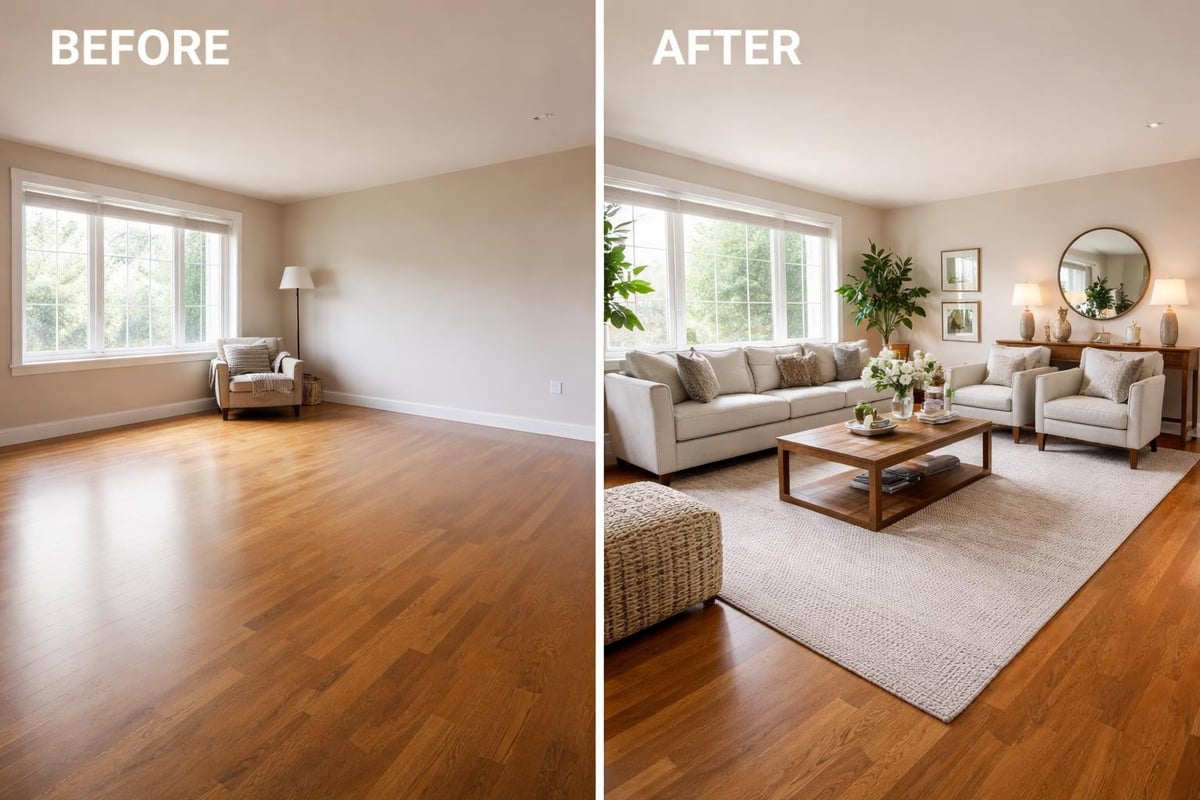
For properties in competitive markets, premium staging options like the Luxury Home Staging (Lux Package) provide comprehensive design solutions that position homes as market-ready showcases. High-end staging includes premium furniture, curated artwork, and refined styling that maximizes perceived value for luxury listings.

Room Prioritization
Budget constraints often require strategic decisions about which areas receive full staging treatment. Prioritize spaces that influence buyer decisions most significantly: living room, kitchen, primary bedroom, and primary bathroom. These rooms create lasting impressions that shape overall property perception.
Secondary bedrooms, dining rooms, and outdoor spaces enhance overall presentation but carry less weight in buyer decision-making. Staged model rooms demonstrate potential, while less critical spaces may receive lighter styling or remain minimally furnished.
Marketing Excellence in the Listing of House Process
Comprehensive marketing strategies expose properties to qualified buyer pools through multiple channels. Digital marketing dominates modern real estate, though traditional methods still contribute to overall visibility. The most effective campaigns integrate online presence, professional photography, and strategic promotion across platforms.
Professional Photography and Visual Content
High-quality photography serves as the first impression for most potential buyers. Professional real estate photographers understand lighting, angles, and composition techniques that showcase properties optimally. Investment in professional photography generates exponential returns through increased online engagement and showing requests.
Visual content extends beyond still photography. Virtual tours, video walkthroughs, and drone footage create immersive experiences that help buyers evaluate properties remotely. These tools filter serious prospects from casual browsers, improving the quality of showing requests.
Essential visual content elements:
Exterior shots capturing curb appeal and architectural features
Wide-angle interior photos showing room proportions
Detail shots highlighting unique features and finishes
Twilight photography creating emotional appeal
Aerial drone footage for properties with notable locations or lot features
Natural light photography typically produces the most appealing images. Schedule photo sessions during optimal lighting conditions, ensuring all lights are on and window treatments properly adjusted. Post-processing enhances images while maintaining realistic representation.
Digital Marketing Channels for Listing of House
Online property portals capture the majority of buyer searches. Major platforms including Zillow, Realtor.com, and Redfin aggregate millions of monthly visitors actively searching for properties. Optimized listings with complete information, multiple high-quality photos, and detailed descriptions perform significantly better than minimal entries.
Social Media Promotion Strategies
Social media platforms offer targeted advertising capabilities that reach specific buyer demographics. Facebook and Instagram advertising allow precise targeting based on location, age, income level, interests, and behaviors. These platforms excel at generating awareness and driving traffic to listing websites.
Platform | Primary Use | Best Content Type |
|---|---|---|
Targeted ads, community sharing | Photos, virtual tours, event promotion | |
Visual storytelling, lifestyle appeal | High-quality photos, Stories, Reels | |
YouTube | Video tours, neighborhood highlights | Professional walkthroughs, area guides |
Professional network, investor reach | Property details, investment analysis |
Consistent posting schedules and engagement with comments and messages build momentum around listings. User-generated content from open houses and showing feedback creates social proof that influences additional buyer interest.
Email Marketing and Direct Outreach
Email campaigns targeting agent networks and potential buyer databases generate qualified leads. Real estate professionals maintain contact lists of active buyers, investors, and colleagues who represent buyers. Personalized outreach to these contacts often produces quicker results than passive marketing alone.
Neighborhood marketing informs nearby residents who may know potential buyers. Friends, family members, and colleagues of current residents frequently express interest when properties become available in desirable neighborhoods. Direct mail campaigns targeting specific radius areas around listings capture this audience segment.
Managing Showings and Open House Events
Property showings provide opportunities for buyers to experience homes firsthand and develop emotional connections that drive offers. Strategic showing management balances seller convenience with buyer accommodation. Flexibility in showing availability often correlates with faster sales, as rigid schedules may eliminate potential buyers with limited availability.
Preparing for Successful Showings
Pre-showing preparation ensures properties present optimally during every viewing. Temperature control creates comfortable environments regardless of season. Pleasant ambient scents from subtle candles or fresh flowers enhance sensory experience without overwhelming visitors. Background music at low volume creates welcoming atmosphere while maintaining focus on the property itself.
Showing day checklist:
Complete final walk-through 30 minutes before arrival
Turn on all lights throughout the property
Open window treatments to maximize natural light
Set comfortable temperature (68-72°F)
Remove pets and pet-related items
Secure valuables and personal documents
Ensure all rooms are accessible
Seller absence during showings allows buyers to explore freely and discuss properties candidly with their agents. Lingering sellers create awkward dynamics that inhibit honest buyer reactions and agent feedback.
Open House Strategy and Execution
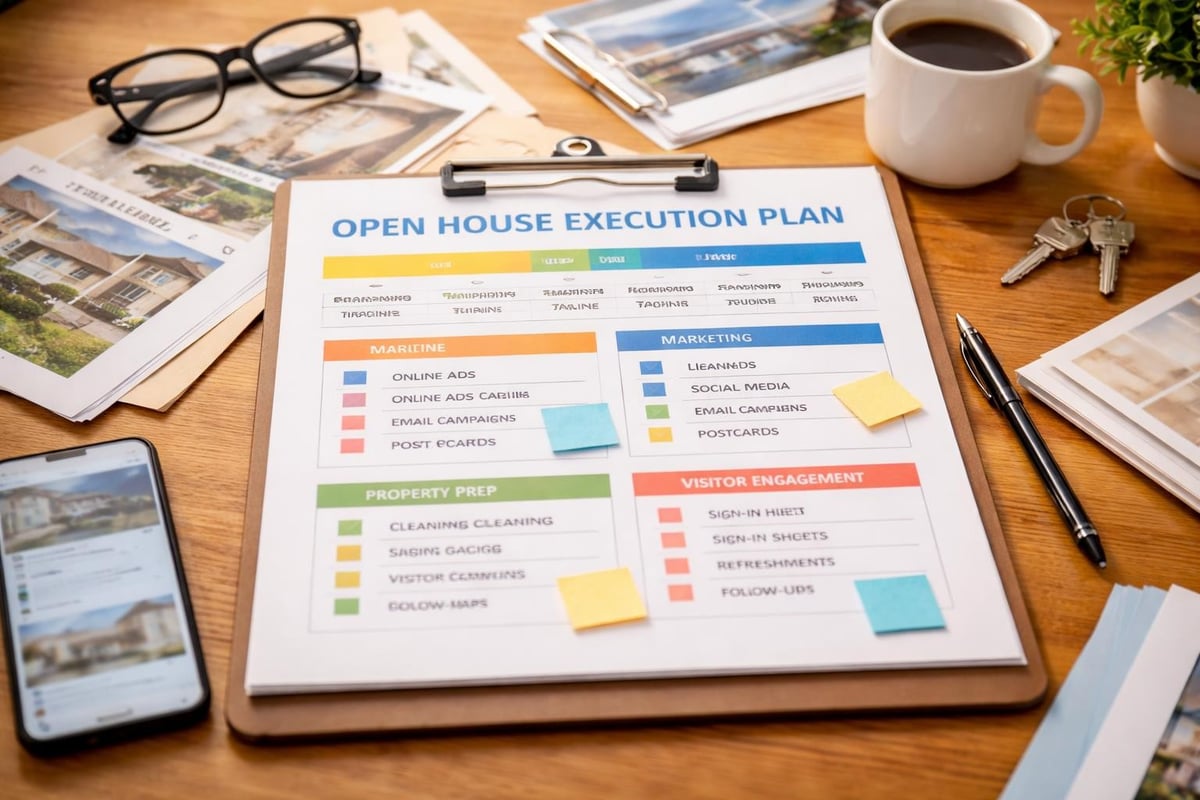
Open houses generate concentrated buyer traffic and create urgency through competitive dynamics. Multiple visitors touring simultaneously often accelerate decision-making as buyers recognize competition for desirable properties. Strategic open house timing maximizes attendance, typically Sunday afternoons when buyer availability peaks.
Promotion begins 7-10 days before scheduled open houses through yard signs, online event listings, social media advertising, and email campaigns. Directional signage placed strategically throughout neighborhoods guides traffic to properties effectively.
Guest registration captures contact information for follow-up while providing insights into buyer demographics and interest levels. Professional presentation through branded materials, property brochures, and neighborhood information packets reinforces quality positioning. You can explore more staging examples and successful listings in the portfolio section.
Evaluating and Negotiating Offers on Your Listed House
Offer evaluation requires analysis beyond simple price comparison. Terms, contingencies, buyer qualifications, and closing timelines all impact net proceeds and transaction risk. Multiple offers necessitate strategic evaluation that balances financial return with certainty of closing.
Offer Component Analysis
Purchase price represents only one element of offer quality. Strong buyers with pre-approved financing and minimal contingencies often provide more value than higher-priced offers with questionable financing or extensive inspection contingencies. Down payment size indicates buyer financial strength and reduces lender-related transaction risk.
Offer Component | Ideal Scenario | Red Flags |
|---|---|---|
Purchase Price | At or above asking | Significantly below market with poor justification |
Down Payment | 20%+ of purchase price | Less than 10%, unclear fund source |
Financing | Pre-approved conventional loan | Pre-qualification only, FHA with property concerns |
Contingencies | Minimal, reasonable timelines | Extended inspection periods, vague terms |
Closing Timeline | Aligns with seller needs | Rushed or excessively delayed |
Earnest Deposit | 2-3% of purchase price | Less than 1%, slow deposit delivery |
Escalation clauses automatically increase offer prices to predetermined amounts above competing offers. These clauses demonstrate serious buyer intent while maintaining price discipline through established caps.
Counteroffer Strategies
Counteroffers allow sellers to modify terms while keeping negotiations active. Strategic counters address specific concerns while maintaining positive momentum toward agreement. Multiple simultaneous counteroffers to different buyers create competitive tension that may improve final terms.
Common counteroffer modifications include price adjustments, altered closing dates, modified contingency periods, and inclusion or exclusion of specific property items. Clear communication through real estate professionals prevents misunderstandings that derail negotiations.
Legal and Administrative Requirements for Listing of House
Property disclosures protect both buyers and sellers through transparent communication of known property conditions. State and local regulations mandate specific disclosure requirements that vary by jurisdiction. California sellers must complete extensive disclosure documents covering property condition, neighborhood factors, and natural hazard zones.
Required Disclosure Documents
Transfer disclosure statements outline known material facts about property condition, past repairs, and operating systems. Natural hazard disclosure reports identify properties within flood zones, fire hazard areas, earthquake fault zones, and other environmental risk areas. Homeowners association documents disclose community rules, fees, and financial conditions for properties within HOA governance.
Lead-based paint disclosures apply to homes built before 1978, providing buyers with information about potential lead hazards. Sellers must allow 10-day inspection periods for lead assessment. Failure to comply with disclosure requirements creates legal liability and potential transaction cancellation rights for buyers.
Working with Real Estate Professionals
Licensed real estate agents provide market expertise, negotiation skills, and transaction management that most sellers cannot replicate independently. Agent commission costs typically range from 5-6% of sale price, split between listing and buyer agents. This investment delivers value through higher sale prices, faster transactions, and reduced seller stress. For comprehensive staging services that complement your real estate strategy, explore available staging services designed to maximize listing appeal.
Agent selection requires evaluation of local market knowledge, recent sales performance, marketing capabilities, and communication style. Interview multiple candidates, review their marketing plans, and assess compatibility before making commitments. The right agent partnership significantly influences listing success.
Successfully navigating the listing of house process requires strategic preparation, accurate pricing, professional presentation, and comprehensive marketing that positions properties competitively in today's market. Each decision from initial repairs through offer negotiation impacts ultimate sale outcomes and seller satisfaction. Stage Joy provides the expertise and customized staging solutions San Diego sellers need to showcase their properties' best features, attract qualified buyers, and achieve optimal sale results through proven staging strategies that deliver measurable value.