
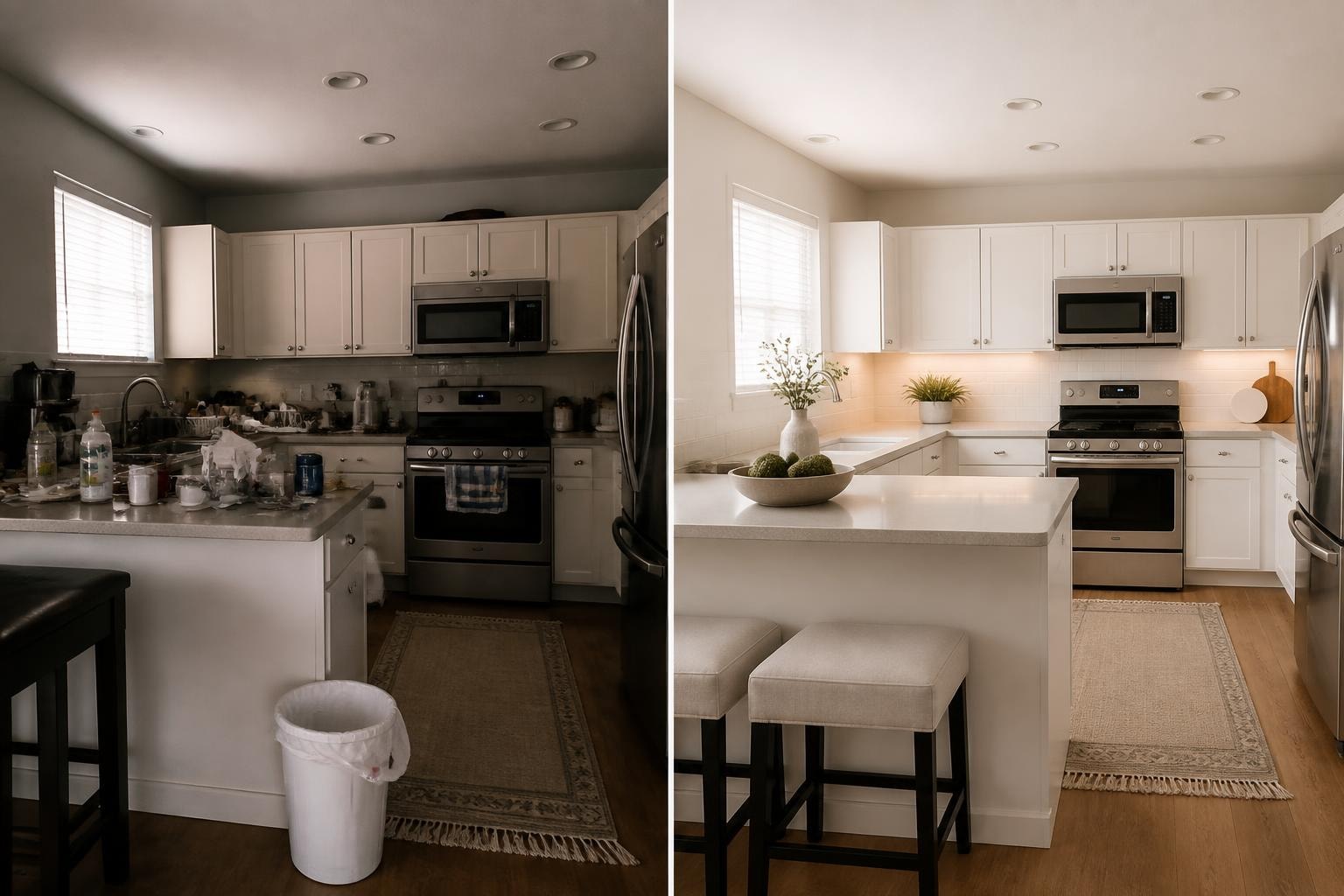

The kitchen serves as the emotional and functional heart of any home, making it one of the most scrutinized spaces during property showings. When staging a kitchen effectively, sellers can dramatically influence buyer perception and ultimately affect both sale price and time on market. Research consistently demonstrates that professionally staged kitchens generate stronger offers and faster transactions, particularly in competitive real estate markets like San Diego. This comprehensive guide explores the strategic approaches, practical techniques, and design principles that transform ordinary kitchens into compelling selling features.
Understanding the Psychology Behind Kitchen Staging
Buyers make critical decisions within seconds of entering a kitchen space. The goal of staging a kitchen extends beyond simple cleanliness to creating an environment where potential purchasers can envision their own culinary experiences and family gatherings.
The Emotional Connection Factor
Kitchen staging taps into aspirational living. Buyers don't simply evaluate cabinet quality or appliance conditions; they imagine hosting dinner parties, preparing weekend breakfasts, and creating family memories. Professional staging creates this emotional bridge by presenting the space as both functional and inviting.
The most successful staging strategies consider multiple psychological triggers:
Cleanliness signals overall home maintenance quality
Organization suggests ample storage capacity
Modern updates indicate reduced future renovation costs
Neutral palettes allow personalization fantasies
Research from real estate professionals shows that kitchens rank among the top three spaces influencing purchase decisions. When staging techniques focus on highlighting spatial functionality, they address both practical concerns and emotional desires simultaneously.
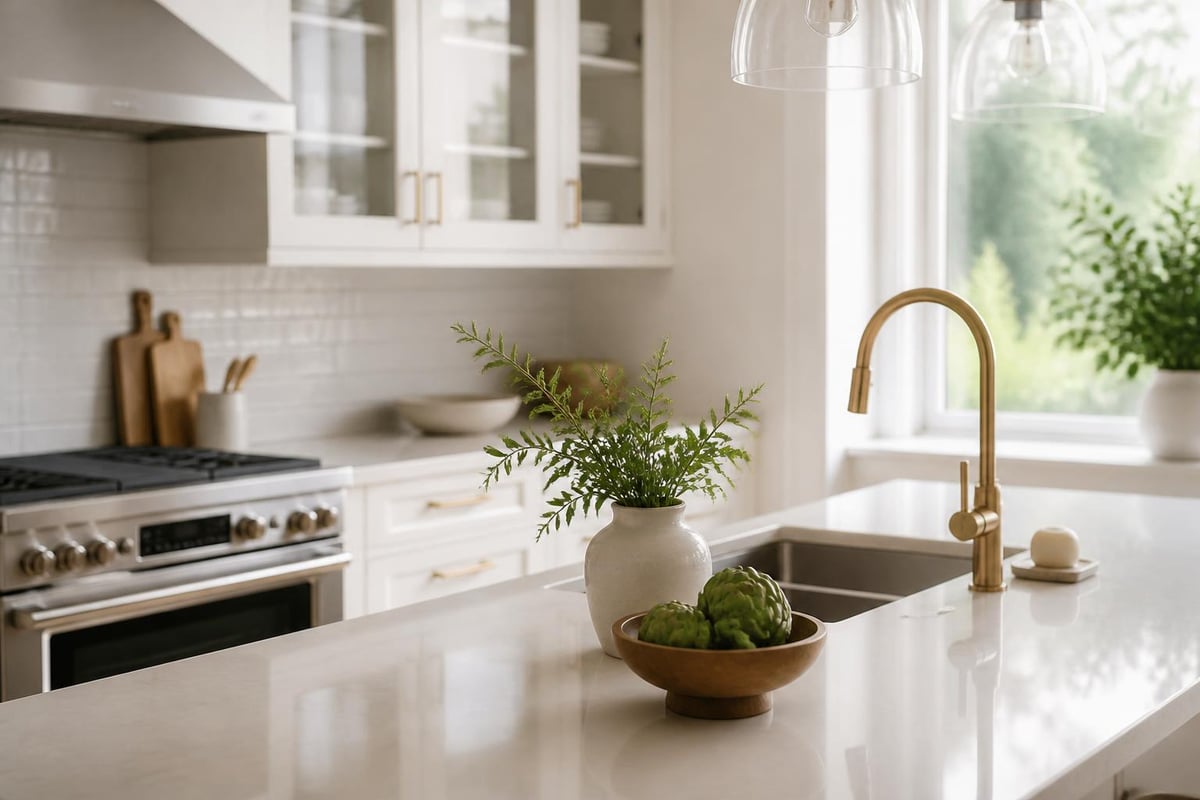
Decluttering and Depersonalizing Your Kitchen Space
The foundation of effective staging a kitchen begins with ruthless decluttering. Countertops crowded with appliances, refrigerators covered in magnets, and overstuffed cabinets communicate chaos rather than capability.
Countertop Management Strategies
Bare countertops create the illusion of abundant workspace. Remove all small appliances except perhaps one statement piece like a high-end coffee maker or stand mixer. Store toasters, blenders, knife blocks, and dish racks completely out of view.
Professional stagers recommend the "rule of three" for kitchen counters:
Keep absolutely nothing visible for maximum impact
Display only one carefully selected decorative element
Limit functional items to a single premium appliance
Many homeowners struggle with where to store small kitchen appliances during the staging period. Consider renting temporary storage, using basement space, or strategically organizing items within cabinetry using drawer dividers and shelf risers.
Cabinet and Pantry Organization
Buyers inevitably open cabinets during showings. Neat, organized interiors suggest well-maintained homes and adequate storage capacity. Remove excess items to create visual breathing room within each cabinet, displaying only essential dishware and cookware in coordinated sets.
Storage Area | What to Remove | What to Keep |
|---|---|---|
Upper Cabinets | Mismatched dishes, novelty mugs, excess glassware | Coordinated dish sets (8 pieces max), uniform glassware |
Lower Cabinets | Plastic containers, specialty gadgets, duplicate pots | Quality cookware (one set), essential baking items |
Pantry | Bulk items, personal snacks, expired goods | Organized rows of matching containers, neat labels |
Strategic Updates That Maximize Kitchen Appeal
Staging a kitchen doesn't always require major renovations. Strategic, budget-conscious updates often deliver impressive returns on investment by modernizing the space without extensive construction.
Hardware and Fixture Transformations
Cabinet hardware replacement ranks among the highest-impact, lowest-cost staging interventions. Swapping outdated brass or generic knobs for contemporary brushed nickel or matte black hardware instantly modernizes the entire kitchen aesthetic. Similarly, updating faucet fixtures creates a fresh, well-maintained impression.
Professional staging companies typically invest in these accessible updates:
Modern cabinet pulls and knobs ($3-8 per piece)
Contemporary faucet fixtures ($150-400)
Updated light switch and outlet covers ($2-5 each)
LED under-cabinet lighting strips ($30-100 per section)
Paint and Color Considerations
Neutral paint colors expand perceived kitchen size while allowing buyers to envision their own design preferences. Soft whites, warm grays, and subtle beige tones create bright, welcoming environments that photograph exceptionally well for online listings.
When selecting paint colors for staging a kitchen, consider how natural and artificial lighting affects color perception throughout the day. Many common kitchen design mistakes involve choosing colors that appear dramatically different under various lighting conditions.
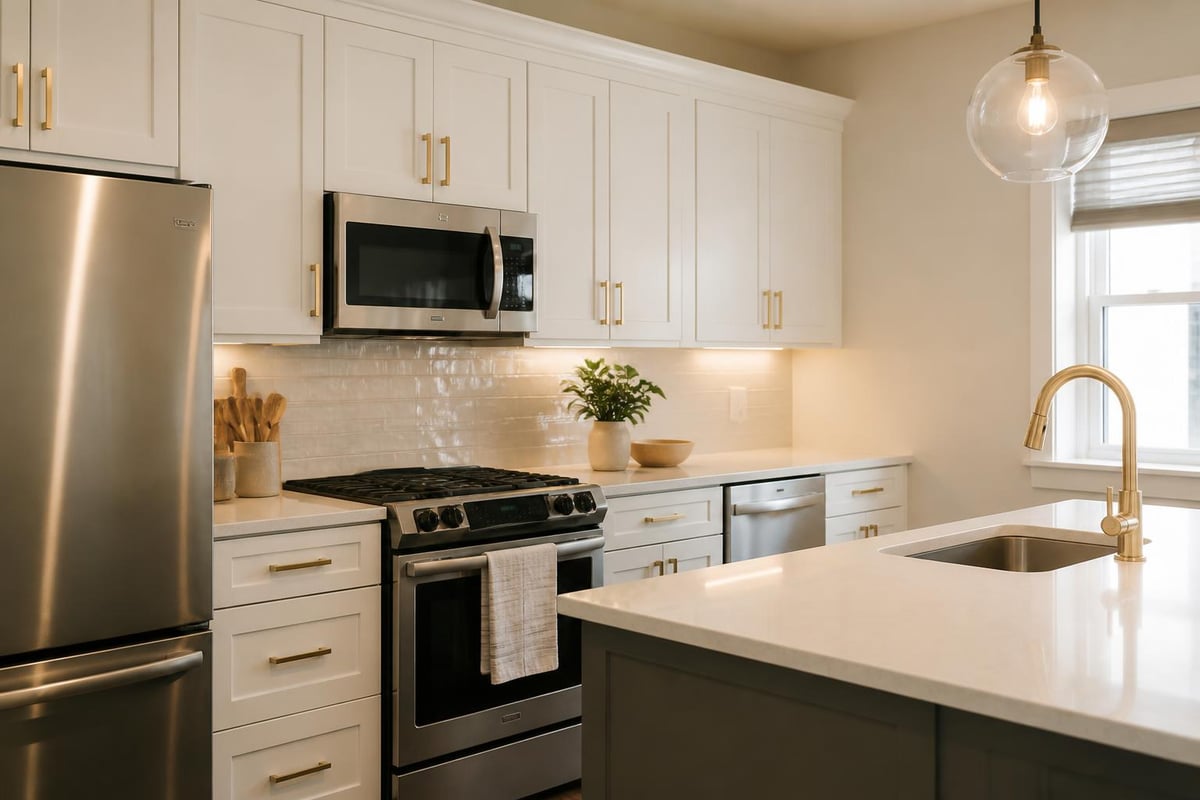
Lighting Optimization for Kitchen Staging
Proper illumination transforms kitchen ambiance while addressing functional concerns that buyers actively evaluate. Dark, poorly lit kitchens feel cramped and uninviting regardless of actual square footage.
Layered Lighting Approach
Successful kitchen staging incorporates multiple lighting types at different levels. Combine ambient ceiling fixtures, task lighting above work surfaces, and accent lighting to highlight architectural features or display areas.
Consider these lighting enhancements:
Replace outdated ceiling fixtures with modern pendants or flush-mounts
Install under-cabinet LED strips to illuminate countertops
Maximize natural light by removing heavy window treatments
Add interior cabinet lighting for glass-front displays
Increase bulb wattage within fixture safety limits
Natural light particularly influences buyer perception. Remove or replace heavy curtains with simple, light-filtering options that maintain privacy while allowing sunshine to brighten the space. For kitchens with limited natural light, consider strategies to make small kitchens appear larger through reflective surfaces and strategic lighting placement.
Styling and Accessorizing Staged Kitchens
Once decluttering and updates are complete, thoughtful styling adds warmth and personality without overwhelming the space. The objective when staging a kitchen involves creating inviting vignettes that suggest lifestyle possibilities rather than showcasing personal collections.
Minimal Decorative Elements
Less consistently achieves more in kitchen staging contexts. Select two or three carefully curated decorative pieces that enhance rather than clutter the visual landscape. A wooden cutting board leaning against the backsplash, a small potted herb plant, or a decorative bowl containing fresh lemons creates organic, lived-in appeal.
Professional stagers from companies like Stage Joy understand the delicate balance between sterile emptiness and cluttered chaos. They utilize staging inventory specifically selected to complement various kitchen styles while maintaining broad buyer appeal.
Effective kitchen accessories include:
Accessory Type | Purpose | Placement Strategy |
|---|---|---|
Fresh flowers or greenery | Add life and color | Small arrangement near sink or on island |
Fruit bowl | Create organic warmth | Kitchen island or dining area |
Cookbook display | Suggest culinary lifestyle | Leaning against backsplash, limit to 2-3 books |
Quality dish towels | Add subtle color accent | Draped over oven handle, folded neatly |
Table Setting Considerations
If the kitchen includes a breakfast nook or dining area, a simple place setting for two creates intimacy and demonstrates functionality. Use neutral dishware, quality linens, and perhaps a small centerpiece to establish welcoming ambiance without overwhelming the space.
Addressing Common Kitchen Staging Challenges
Every kitchen presents unique staging obstacles based on layout, size, age, and condition. Understanding how to navigate these challenges separates amateur attempts from professional results.
Small Kitchen Solutions
Compact kitchens require particularly strategic staging a kitchen approaches to prevent spaces from feeling cramped or inadequate. Focus on maximizing perceived square footage through visual tricks and intelligent organization.
Galley kitchens benefit from minimalist styling and reflective surfaces. Remove upper cabinet doors to create open shelving (displaying only coordinated dishware), use mirrors strategically to bounce light, and maintain completely clear countertops to emphasize available workspace. Additional tips for making galley kitchens appear larger include using vertical storage solutions and maintaining consistent color schemes.
Outdated Kitchen Approaches
Older kitchens with original cabinetry, dated backsplashes, or worn countertops require creative staging to shift focus toward positive attributes while minimizing obvious deficiencies.
Budget-conscious staging strategies for older kitchens:
Deep clean everything to demonstrate care and maintenance
Update only high-visibility elements like hardware and lighting
Use styling to draw eyes upward toward architectural features
Stage adjacent spaces luxuriously to balance kitchen limitations
Emphasize potential through strategic furniture placement suggesting renovation possibilities
The Luxury Home Staging package offers comprehensive solutions for properties where kitchen condition might otherwise negatively impact perceived home value. Professional staging teams utilize premium furniture, refined styling, and strategic design elements throughout the property to create cohesive, market-ready presentations that help buyers see beyond individual room limitations.

Seasonal Considerations for Kitchen Staging
Timing influences staging a kitchen strategies, particularly regarding color palettes, accessory selections, and overall aesthetic approaches. While neutral foundations remain constant, subtle seasonal touches can enhance buyer connection during specific market periods.
Year-Round Staging Fundamentals
Core staging principles transcend seasonal variations. Cleanliness, organization, neutral colors, and adequate lighting remain essential regardless of listing timing. However, minor adjustments can strengthen emotional appeals during different seasons.
Spring staging emphasizes fresh, bright elements through white florals and light green accents. Summer staging incorporates outdoor connectivity by ensuring clean window views and suggesting indoor-outdoor entertaining. Fall staging introduces warm metallics and organic textures, while winter staging focuses on cozy lighting and warm neutral tones.
Professional Staging versus DIY Approaches
Homeowners frequently debate whether staging a kitchen requires professional assistance or represents a manageable do-it-yourself project. The answer depends on multiple factors including budget constraints, timeline pressures, design confidence, and property price points.
When to Hire Professional Stagers
Luxury properties, competitive markets, and vacant homes particularly benefit from professional staging expertise. Experienced staging companies bring not only furniture and accessories but also objective perspectives, market knowledge, and design sophistication that homeowners rarely achieve independently.
Professional staging advantages include:
Access to current, high-quality furniture inventory
Objective assessment of property strengths and weaknesses
Understanding of local buyer preferences and market trends
Photography-optimized design decisions
Consistent execution across entire property
Companies specializing in luxury staging understand how to position high-end properties to justify premium pricing through exceptional presentation quality. Their expertise extends beyond individual rooms to create cohesive narratives that communicate lifestyle and value throughout entire properties.
DIY Staging Success Factors
Homeowners with design confidence, adequate budgets for necessary updates, and sufficient time can successfully execute kitchen staging independently. Success requires honest assessment of current conditions, willingness to remove personal items, and commitment to maintaining staged conditions throughout the marketing period.
Utilize practical kitchen staging ideas from industry experts to guide decision-making and avoid common pitfalls. Focus investments on high-impact areas like decluttering, deep cleaning, and minor updates rather than attempting comprehensive renovations that may not deliver proportional returns.
Maintaining Staged Kitchens During Market Periods
The most beautifully staged kitchen loses effectiveness if conditions deteriorate during the listing period. Maintaining presentation quality requires discipline and systems, particularly for occupied homes where daily living continues alongside marketing efforts.
Daily Maintenance Protocols
Establish strict routines to preserve staging conditions between showings. This becomes particularly challenging in kitchens where cooking, eating, and general activity naturally create mess and clutter.
Implement these maintenance strategies:
Store daily-use items in closed containers that can be quickly hidden before showings
Clean countertops and sinks immediately after each use
Run dishwashers nightly to ensure empty sinks each morning
Remove trash daily to prevent odors and overflow
Refresh decorative elements weekly to maintain crisp appearance
Many sellers find it helpful to establish temporary kitchen routines during the staging period, such as eating out more frequently, using paper products to minimize dishwashing, or preparing meals in slow cookers that can be stored out of sight.
Measuring Kitchen Staging Success
Understanding whether staging a kitchen efforts deliver desired results requires tracking specific metrics beyond simple sale completion. Professional stagers and real estate agents evaluate multiple performance indicators to assess staging effectiveness.
Key Performance Indicators
Photography engagement serves as an early success indicator. Online listings featuring professionally staged kitchens typically generate higher click-through rates, longer viewing times, and more showing requests than unstaged equivalents.
Metric | Unstaged Kitchen Average | Staged Kitchen Average | Improvement |
|---|---|---|---|
Days on Market | 68 days | 41 days | 40% reduction |
Showing Requests (first week) | 4-6 requests | 12-15 requests | 150% increase |
Final Sale Price (% of asking) | 95-97% | 98-102% | 3-5% increase |
Buyer Offer Frequency | Single offer typical | Multiple offers common | 200%+ increase |
Real estate professionals in competitive markets recognize that kitchen staging particularly influences multiple-offer situations where buyers evaluate numerous similar properties. The portfolio of successfully staged properties demonstrates how strategic presentation differentiates listings and commands premium positioning.
Kitchen Staging Return on Investment Analysis
Financial considerations ultimately drive most staging decisions. Understanding the relationship between staging costs and potential return helps sellers make informed investment choices regarding staging a kitchen and other property areas.
Cost-Benefit Calculations
Kitchen staging costs vary dramatically based on scope and approach. DIY efforts might require only $200-500 for cleaning supplies, minor updates, and accessories, while professional staging packages range from $1,500-5,000+ depending on duration and inventory requirements.
Compare these investments against potential returns. A property listing for $750,000 that sells for even 2% above comparable unstaged homes generates an additional $15,000 in seller proceeds. When staging costs total $3,000, the net return reaches $12,000-a 400% return on investment.
Additional financial benefits include:
Reduced carrying costs through faster sales (mortgage, utilities, insurance)
Decreased price reduction likelihood by generating immediate buyer interest
Stronger negotiating position when multiple offers create competitive bidding
Higher appraisal values supporting buyer financing and reducing deal failures
Coordinating Kitchen Staging with Overall Home Presentation
While staging a kitchen represents a critical component of property preparation, isolated efforts rarely achieve optimal results. Cohesive staging across all visible spaces creates the seamless, move-in-ready impression that generates strongest buyer response.
Whole-Home Staging Strategies
Kitchen staging should complement and enhance adjacent living spaces rather than existing in isolation. Color palettes, style aesthetics, and design sophistication levels must remain consistent throughout the property to avoid jarring transitions that disrupt buyer experience.
Professional staging companies evaluate entire properties holistically, identifying focal points, traffic flow patterns, and strategic emphasis areas. They understand how first impressions in entry spaces influence kitchen perceptions, and how kitchen quality affects expectations for private bedroom and bathroom spaces.
For sellers seeking comprehensive staging solutions that extend beyond individual rooms, exploring complete home staging services ensures coordinated presentation quality that positions properties competitively within local markets. This integrated approach addresses everything from curb appeal through final bedroom details, creating narratives that justify asking prices and accelerate transaction timelines.
Strategic consultation helps sellers prioritize staging investments based on property conditions, target buyer demographics, and competitive landscape factors. While kitchens consistently rank among highest-priority staging areas, optimal resource allocation considers the unique characteristics of each property and market situation.
Staging a kitchen successfully combines practical decluttering, strategic updates, thoughtful styling, and ongoing maintenance to create spaces that inspire buyer confidence and emotional connection. Whether pursuing DIY approaches or engaging professional expertise, the fundamental principles remain consistent: cleanliness, organization, neutrality, and aspirational presentation. Stage Joy brings extensive home staging and interior design experience to San Diego properties, offering customized solutions that highlight each home's best features while maintaining budget-conscious approaches that deliver measurable results. Contact their team to discover how professional staging transforms your kitchen and entire property into a compelling, market-ready presentation that attracts serious buyers and maximizes sale success.